Joachim Persson reports back with a summary of impressions and thoughts from online participation at COP30, November 10-22, 2025.
November 10
Started off the first day with listening to a few press conferences of interest (for me) as well as listening in on the Ceremonial Opening.
I think the press conferences below pretty much summons up the hope and the setting for COP30.
10 New Insights in Climate Science for 2025
Press conference by Future Earth pointing out the current accelerating climate events. Johan Rockström presented the report that gave name to the conference, available at https://10insightsclimate.science/. I think it pretty much summons up the situation.
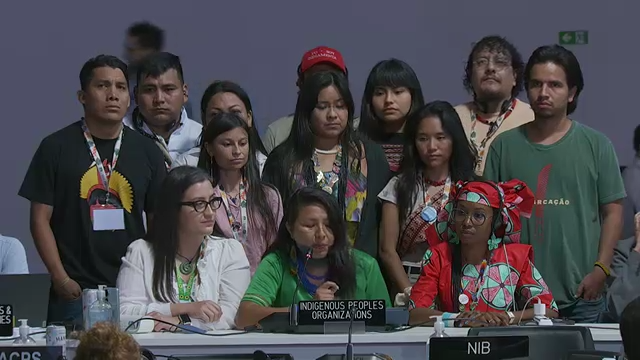
EarthWorks: Securing indigenous peoples rights
Primarily talks on how mining rights in the current hunt for industrial ores and rare earth minerals infringe on indigenous people’s rights. It’s extractionism without consent. Pointing out the importance of getting Prior Informed Consent from all the communities affected by the operation, especially the indigenous. Unfortunately, the current methodology is still as it was before resulting in indigenous people being displace, their environment contaminated, leading to health problems. The operating entities cause division of communities leading to conflict, while the majority of the riches goes to rich regions and corporations. As it has done for ages…
They also reminded us that the negotiations on the Just Transition work program, that was meant to acknowledge the indigenous peoples worth, broke down in Baku, so let’s hope this issue is addressed properly in Belém.
CAN international, focused their first press conference on ‘Delivering climate justice’. Failure to address and deliver Climate Justice in COP30 would be a major failure of COP, as expressed by some members here.
Some harsh, but justified, words on delivering NDC’s (Nationally Determined Contributions) on time, not doing so should be equal to sabotage. They also pointed out the movement of far right fighting the climate work, as well as justice. Other one-liners:
“Still the same extraction of resources – but painted green”.
“It’s not about words – it’s about action”.
Greenpeace: What COP30 must deliver for 1.5C
Pointing to present delays and inaction - action is needed, we are already dangerously off track.
Make clear the questions: Why, Who, What (to reduce), and how to compensate those already hit by the effects.
Martin Keiser pointed out that Climate Change is here and now, and while the right-wing are afraid of change to their everyday comforts, we must act.
Fossil fuel phaseout
Forrest action plan I effect by 2030
Fair finance if climate change work
Zhe Yao (representing East Asia – but mostly China), said that China leads the way as the leader of clean energy, to show that it is possible to cover 100% with renewables (Wind and Solar spec.) and phase out fossil fuels for energy production. Also pointed out to the positive partnership between China, EU and Brazil in this (a bit biased if you asked me, but a bit of sunlight in the dreary reports).
It is a nice touch to call the US federal non-presence being like the Eye of Sauron in the distance.
The Climate Registry: California Climate Leadership/Setting the stage for Californias Climate Action.
Representing those in the US who are not supporting the current federal policy on climate, Senator Becker gave a glimpse of hope for the people of the US.
Most people in the US, and most states, continue to believe in climate action, moving to better sustainable (and cheaper) solutions for energy. In
California continues to remove emissions, and economy is growing. Next step is decarbonization. They have presented a roadmap covering the period until 2045.Federal action can slow us but not stop us. Affordability is an issue, “clean” electricity is getting cheaper but is still expensive, there is a need to make it more affordable.
Climate literacy is important and a thing that California aim at, while the cuts from fed for research is catastrophic.
Ceremonial Opening of COP30
Mukhtar Babayev handing over the chairman’s club to André Corrêa de Lago, the former telling us of the success of COP29 and the latter promising that COP30 will be the COP of implementation. Hear and Believe in science – this is The COP of truth!
Between all this, two things stuck (for me at least) - the critical ocean climate needs to be addressed and pointing to science as a critical enabler.
Let’s see where this leads us the next two weeks.
November 11
Spent most of the time listening to the Joint plenary meeting of COP 30, CMP 20, CMA 7, SBSTA 63 and SBI 63 to take up statements
It is of some interest to hear what the parties want to get out of the COP, especially to compare with the closing plenary next Friday.
Hopes are high, stakes are even higher.
Press conferences:
LINGO: Hundreds of Gigatons of fossil fuel mitigation possible vi the TFFF
TFFF = Tropical Forest Forever Facility, LINGO= Leave It in the Ground
Talks about the large reserves of oil, gas, and coal beneath the current tropical forests and why we should leave it buried there. Also applies to other types of mining and extraction.
You can’t protect the forest while extracting resources, so leave it underground and compensate the countries doing so. Today many countries contradict themselves trying to protect forests while still giving permits for extraction. See the link below for their documentation.
https://www.leave-it-in-the-ground.org/wp-content/uploads/2025/11/Solutions-Under-the-Forest.pdf
Germanwatch: Climate Risk Index
Information on the CRI for 2026 and listing the countries most affected by climate change. The report can be downloaded at https://www.germanwatch.org/en/cri
Countries are not prepared - there is an ambition gap, where current goals are not adequate.
November 12
Listening in to a mix of subjects of interest.
Union of Concerned Scientists (USC): Climate Action Against Disinformation
Press conference on information integrity. For the first time information integrity is on the agenda on a COP, and it is much needed.
Miss- and dis-information is spread continuously by parties with own business interests. Manipulation and disinformation are used as a business model to further agendas contrary to climate science. It’s everywhere and it’s sophisticated. And that they can cause real world damage, as seen in the wake of catastrophes in both US and Spain. Propagation of lies and false solutions is hindering real efforts in battling climate change.
We have is a “Pollution of Information”, to cite USC. Large platforms (like Meta, Alphabet, X and TikTok to name some of the largest) are seriously harming people and climate work through disinformation driven by a business model looking foremost at their own advertising revenues.
Let’s hope this really will be a COP of Truth.
See more on https://www.ucs.org/
This is a topic I quickly get involved in as you might notice. Unfortunately, I see the same tendencies in more “professional” networks like LinkedIn, where scam and misinformation pop up continuously (and where you risk retaliatory actions like shadow ban for pointing it out).
SBSTA 13 Emission from fuel used for international aviation and maritime transport – Internal consultation
ICAO (on aviation) presented their work on policies and regulation for international aviation. Progress is made, but the process needs to be accelerated (accelerated process is a key to success). Taxation of aviation raises concern among member states. As well as the global south raising concerns that it will hit them harder.
IMO (maritime), despite the adjournment of the last “extraordinary session” (that will be taken up at earliest November 2026), they continue their substantial work on marine emissions. There is a need for broader consensus, and more work is needed before the next session is in April 2026.
Most important questions raised: China lifted the question on how to motivate aviation mitigation in third world countries. The Arab group was concerned about the implementation of the maritime resolutions and how to move forwards. Australia gave voice to their disappointment of IMO regarding the adjournment of the last session.
EU Press Conference
We need to do more to follow up on the stock take done two years ago. The EU also needs to deliver on the promised finance goals and scale up financing.
Pointed out the importance of delivering the NDC’s and that there is a gap between the delivered NDC’s and the paths taken by member states. As always, transparency is important.
Accelerated implementation to meet the Paris agreement is needed. There are strong views and differences within EU (as well as outside) and a balanced package is needed.
It’s only early in this COP, but it looks promising. (They also had some less nice wording about the US government stance)…
CAN International
Adaptation must be the top priority of COP30, we need to build climate resistance.
But there is a tug of war on adaptation. We need to deliver to build resilience and need adaptation financed. There has been a breakthrough on transition with G77 and China to enable and coordinate work on just transition.
The presented a information from the CAN “underground” network in the US, that sees just transition happening all over US despite the current government effort to stop it.
Then a report on Climate Change and Disinformation, concerning how disinformation spikes around major events (be it COP or climate induced disasters).
Bad news was that Canada have rolled back a law on greenwashing.
SBSTA – Progress in developing GHG Data Interface
Mostly a technical report on the development of this tool. Timeline for new update, that includes Paris Agreement data, is 11 months, but they are struggling with finance (335 000$). They also had problems getting the participating countries to send data in correct format (JSON).
Tool and information available at https://unfccc.int/topics/mitigation/resources/registry-and-data/ghg-data-from-unfccc
The Climate Center: How the United States is Making Progress on Climate Action in spite of the Trump Administration
Information from the State of California again, and they give some hope for the USA. No happy talk, but momentum is happening.
They started off with an apology to the global community for the harm the Trump administration have caused, including real damage to the global South, harm to US science and climate work.
Progress might have slowed but not stopped. Despite loss of federal funding, California and local government are taking action, raising funds from private sectors and investors.
In California 70% of electricity comes from renewables (7hours a day it’s 100%) and aim at 100% by 2045. The aim includes that electricity must be affordable as well.
People care and that gives me hope.
November 13
Today’s pick from me.
Listened in on the presidency press conference, and a few other meetings as well.
Climate Analytics: Climate Action Tracker, Global Update
Starting up with the statement that “The Paris agreement works, we are heading towards 2,6°C instead of +3°C”, then a comment a little later that if we go up to 2,6°C we are cooked…
Unfortunately, long term targets miss the mark and new pledges and targets for 2030/2035 are static. In best case we would only reach 1,9°C - but that number is only possible if all countries fulfill all their previous promises. But, currently emissions are going up, when they need to be reduced.
Several countries/regions present stronger targets, but ambition is missing or cancelled out by countries stalling the progress.
Several countries use carbon credits instead of making real progress, and of course the current US administration is weakening the lobal momentum.
Another worrying aspect is that LNG is expanding (foremost in Japan, Australia and EU) despite all, limiting the progress (or possibility) to reach net zero.
China disappoints with its targets by not scaling up their transition. Their new pledges are based on current pace, no upscaling.
Carbon Capture is used as a good excuse, promoted by fossil fuel industry, with unlikely targets presented – unfortunately this has become a greenwashing of sort.
Takeaway: No real reduction of emissions in the last five years and going for an overshoot by 2030.
Website and material to be found at: https://climateactiontracker.org/
Launch of the Global Carbon Budget 2025 (University of Exeter)
The 20.th edition of the carbon budget. Unfortunately, it continues with the bad news from above…
There is a projected increase in coal, oil and gas. And a serious increase in aviation emissions.
China is relatively flat, since they meet the increased demand of energy with renewables, but continue to use same amount of fossil fuels.
USA has had a decrease so far (somewhat thanks to mild winters in the last years), but an increase of 1.,9% is projected, with coal up 7%. Observe that this is not taking into account the impact of Trump administration decisions and projected new datacenters.
EU has had a declining trend, not so for 2025…
On land use it is interesting to notice that China is the top carbon sink. While the largest emitters are Brazil, Indonesia and DR Congo. Of the total emission the sinks are: land 21% of the total emission and sea 29% of total emission…
We have 12 to 25 years to reduce to net zero. 12 years if we want to make 1,7°C and 25 years that will result in 2,0°C, if we miss those we will likely be at 2,6°C or higher by the end of the century (and be cooked).
Time is running out but we can still do something about it!
Their Website. https://globalcarbonbudget.org/
Th presentation: https://globalcarbonbudget.org/download/2406/?tmstv=1762895758
Health and Climate Ministerial Meeting – The Belém Health Action Plan for Adaption of Health Sector to Climate Change
I am going to be sarcastic here:
We have already reached a point where 1 person dies from heat due to climate change every minute, where malaria and dengue-fever are spreading towards our temperate regions.
Enter the philanthropists… Bloomberg, Rockefeller, Gates foundation - all get to advertise their names gloriously for donating 300 million dollars to help fight as diseases and living conditions worsen in track of climate change. Together with generous donations in form of loans from private sectors.
Sorry for the sarcasm - Of course, they are helping out and it is a good thing. But I would be more impressed if they also helped fight the cause, instead of just helping with symptoms. But I am sure this is great PR for them personally… (My personal opinion).
Oil Change International OCI
Talk about fossil fuel industry and producers fueling conflicts and wars.
Unfortunately, no mentioning of Ukraine, possibly to Moscovia aggressively keeping that from the agenda.
Interesting fact that the largest exported of crude oil to Israel is Russia.
November 14
The days pick is mostly from Press conferences.
There is limited information on events outside the meeting rooms, so I am looking forward to Elena’s and Erik’s reports. Iin the press conferences you hear a lot of comments regarding treatment of indigenous people and the heavy presence of fossil fuel lobbyists (see below).
Global Canopy (GC): Transforming Cattle Supply Chains – A climate change solution and key to ending deforestation.
A presentation foremost addressed to the hosting country, Brazil, but with global pointers.
Cattle is the largest driver of deforestation in Brazil, being the largest producer of beef in the world. It is also the largest source of GHG emissions by itself (see context in presentation) if exports are excluded (Palm oil is the largest emitter if counting export emissions), however it is a large local impact.
There has been a sharp rise in Amazonian deforestation since 2018, which now stands for the largest share of land use change in the world.
GC would like to see that the finance driving the supply chains domestic (70%) as well as those exporting to China, US and EU. But present situation is a “Painted picture of inaction” to cite one of the presenters.
Presentation material: https://globalcanopy.org/insights/explainer/brazilian-beef-exports-and-deforestation/
Link to organization homepage: https://globalcanopy.org/
Center on Biological Diversity – Climate Cost of AI infrastructure
The climate cost of the AI driven construction of gigantic datacenters is not covered in COP proceedings. This is a new factor that can have catastrophic impact on climate, locally and globally. The cost for fueling and cooling the AI industries new datacenters is devastating. Their electricity consumption is enormous, US have the highest consumption closing in on half of the total electricity produced within US climate goals (set under the Biden administration), closely followed by China.
Another way to illustrate this is that datacenters for AI in the US consume as much as Japan’s total electricity production. To make things worse, the datacenters in US are mainly driven by utilizing fracking gas, or worse, Like Musk’s centers that use diesel generators. Another problem is the manufacturing and shipping of components for the datacenters from east Asia. They see a 300% rise in energy requirements, that are often met by fossil fuel generation, even if it would be possible to expand available sustainable energy sources.
Investing in giant datacenters for AI is not trivial as they have large impact on energy and water resources. Despite this they are often treated as low impact projects by countries and regions that are promised billions of dollars in income and investment. So far they rarely deliver to their promises (one of the big lies when establishing new centers). Most important, environmental and social costs are rarely, or never, considered.
The Center on Biological Diversity encourages governments to do a realistic Cost-Benefit analysis that include environmental and social factors.
Take away citation: “The AI industry has become a lifeline for fossil industry”
Link to homepage: https://www.biologicaldiversity.org/#
DCJ (Demand Climate Justice)
This DCJ conference focused on the fossil fuel lobby at COP 30.
Larry Rousseau (Canada) representing TUNGO made a great fiery speech about this:
1 600 fossil fuel lobbyists attend, outnumbering the official COP 30 staff. Meaning that 1 in 25 of the delegates is a fossil fuel lobbyist…
While the COP30 seems to do their best to keep indigenous representative and protesters out, the polluters go free.
These lobbyists push false solutions and corporate agendas. What is even worse is that a large part enter the conference under governmental badges, meaning that they don’t have to disclose their affiliations, and even for those using the normal badges, it might be noted that they have two thirds more badges available this COP, while badges to indigenous people are restricted.
Lastly, they pointed out that the lobbyists were among those that have taken most of the expensive lodging in Belém.
Link to DCJ homepage for COP30: https://demandclimatejustice.org/category/cop30/
Presidency Consultation on Mountains and Climate Change.
A precursor for negotiations next week. Takeaway is that the most vulnerable regions take the hardest hits.
A bit confused with Chile and Russia trying to tie this together with the Ocean briefing.
CAN International
Concentrating on just transition and adaptation. Noting a lack of ambition from the rich countries.
They also noted that indigenous movements were not allowed to participate in negotiations, even though a just transition and adaptation concerns these groups both in Global South and the rest of the world.
Good news is that the G77 and China has aligned for a new mechanism that is more inclusive.
As usual the lack of finance is the largest problem and the Global South should be vary of loans, and financial promises bound to obligations of return business or resources.
Homepage: https://climatenetwork.org/updates/event-portal/cop-30-2/
November 17 and 18
Some reflections on the High Level Segment (HLS) that filled most of the time Monday and Tuesday.
It was introduced by Baerbock, Corréa de Lago, Hamladi Alkmin and Stiel.
I’ll do some key takeaways from them.
Stiel: Paris agreement is the only way to survive this climate crisis. The pace of real economy is not met when it comes to climate. An acceleration is needed.
Baerbock: This is the moment of action, on renewables, social justice and climate mitigation and adaptation. The money exists but it needs to be reallocated.
Alckmin: Time is over, each friction increases the risk, we need to accelerate, and we need to deliver. Protecting the forest is protecting life itself.
I will not comment all countries statements but rather make some overall observations, sometimes overlapping:
Global South: They point out that accessible finance is needed, but that it is lacking today. And need of finance primarily in funds, not loans or commitments to foreign industry. Red tape and long handling times make the situation even worse. Most have ambitious plans and have delivered their third NDC, but without finance the work is almost impossible.
G77 and China: Lifted Climate finance and rised some concern on finance from Global North, promises have been made in COP29, but there are delayed in delivering the promised funds. Also note (again) that funds are needed, not loans. Also points out that predictors and indicators need to be timely delivered in a reliable manner.
The African countries: Plagued by high temperature, draught, and torrential rains, resulting in higher desertification, soil degradation and water scarcity, with famine and conflict as result. Several points out that global north still use them for extraction of ore and resources.
AOSIS (the Alliance of Small Island States): As several members here pointed out, this is a matter of survival, they are under threat to be erased from the globe if we don’t manage to break the curve now. They are also hit by the most extreme weather events, some causing damage equal to, or exceeding, their GDP. They need functioning recovery and damage funds, as well as help with finance for transition, resilience, and adaptation. Several of the pacific island nations mentioned the great support they have received from Taiwan; causing an angry reply from China (as expected).
Mountain countries all over the world mentioned the disappearing glaciers with water scarcity (some mentioned over 50% loss of water supplies) as result, something also felt downstream by countries and regions dependent on glacier fed rivers.
Rain forests countries (and others with large forest areas) mentioned the need to help protect the forests, not only from burning and logging, but also to stop plans for extraction of oil gas and minerals in the ground below the forests in many places. Pointed out that we need to listen to indigenous people that knows how to take care of the forests, and the importance to leave indigenous people that live in voluntary isolation left undisturbed (over 180 tribes in the Amazon alone).
Richer countries (both in south and north): pointed out the importance of expanded carbon markets…
For the developed countries:
We have several countries, including most EU countries, that points out that we need to step up: climate change is happening and with catastrophic consequences!
On the other hand, we have several that thinks the Paris agreement is already working as is and that they have done more than anyone else (like Sweden pointing out the reduction the last 20 years - but they are not alone). Sometimes it sounded like they are from another reality.
Several countries mentioned the emission and ecosystem destruction caused by conflict (especially Ukraine, Syria and Gaza), it’s interesting to note that countries driving the aggression, like Israel and Russia, don’t include the military emissions and environmental damage in their emission budget or climate reports. The damage in these countries is enormous.
An interesting note, when compared to last year’s COP, is that nuclear, LNG and carbon capture was mentioned far less. There are still countries mentioning them, but mostly as supplementary resources to reach their goals.
Need to note that Iceland was one of the few that expressed their worry on the possible AMOC weakening, and Denmark’s worry for Greenland future.
Takeaway: We need to act now! For just transition and Finance!
November 19
RINGO meeting (every morning, or 13:00 Swedish time)
These give a lot of information on what is happening and what to follow. They also have a thematic presentation on most days.
Learned a lot about the Mutirão process. The way that Brazil have removed four problematic items to a separate agenda, a key to success and faster work on the main agenda items.
Later in the evening I can say that it seems to have been working well so far.
I note from the EU press conference that the Mutirão have made a difference. Some things said:
It’s time to deliver on previous commitments.
Mitigation is not enough, we need to phase out fossil fuels, decarbonize and grow.
Sustainable growth and not least, focus on climate finance, lifting the importance that countries need to chip in in excess of the EU commitments.
CAN (Climate Action Network) international
Just transition work is driven by G77+China, also noting that EU, Canada, Australia and UK are those slowing down the process.
There is a lot of talk about BAM (Belém Action Mechanism) – a proposal for states to drive action on a just transition towards a low-carbon economy, and it seems to be working.
There was a lot of talk about indicators, as several have pointed out, while indicators are important tools, we need the means to adapt first, not rely on measurements. Indicators are not deliveries by themselves.
I spent the evening listening to negotiations concerning Article 6.4 and the takeaway is that it works smoothly, compared to COP29 negotiations. Also listened through the Accelerated implementation Action meeting, where among other things the roadmap for transitioning away from fossil fuels was discussed. It feels positive so far, so I keep my fingers crossed.
November 20
Some reflection from today’s meetings, the procedures were disrupted after 1800 CET due to a fire in the blue area, and events had to be rescheduled.
RINGO meeting (every morning, or 13:00 Swedish time)
The big picture: The presidency spent all night revising a package to be released during the day, so far, no larger draft delivered, but the negotiating texts concerning article 6 of the Paris agreement was available, and it seems that none of the feared weakened rules have been included.
Rumors have it that President Lula was involved in the negotiations (which have given rise to some criticism).
There are concerns at this point that India and Russia will push for a less ambitious text.
“COP31 seems to have become a strange mythological creature, its head another creature than its tail”, cited from Axel Michaelowa. It will be headed by Australia, Pre-COP31 meetings to be held in the Pacific and the meeting to be hosted in Turkey. Time to book rooms now, prices are already all time high and rooms disappearing rapidly, according to Axel, who already booked accommodation.
They had a great presentation of the UNFCCC Technology Mechanism at this meeting.
On to the main event of the day for me:
High Level Ministerial Round Table on Just Transition
“If transition will not be just, it won’t happen”, was a great starting point.
There need to be a focus on local communities and needs, it will be a continuous process for years to come, but we need to see it not a s a cost but as an opportunity.
It’s not only energy systems, it’s how we work, how we produce, and how we live together. It’s important to protect people’s livelihood.
UNFCCC pointed out that we need to deliver real progress, speed is lacking and to archive this we need trust. Climate action must work for the local communities. We need to go from aspiration to implementation. We need real investment and economic transformation.
Priorities are:
Fairness (this is non-negotiable)
Investment to match the scaled transition
Inclusion on all levels
The round table started off with the NGO’s
All agreed that just transition is needed, BINGO, Farmers and LGMA pointed to importance of including and supporting private sectors, farmers and local enterprise, but also lifted the urgency, the need of just transformation, cooperation and adaptation to local needs.
Most pointed out and supported the BAM (Belém Action Mechanism) as the way to go.
Voices were raised for the need to include and respect indigenous peoples right, including the right to informed consent and respecting indigenous people in voluntary isolation.
TANGO and YOUNGO also gave voice to growing feeling of disappointment, especially when it comes to support for transitioning away from fossil fuel.
Ministerial part:
All agreed that just transition is needed, that it needs to happen now, and with local adaptations.
Urgency is needed and we must keep the Paris agreement goal of 1.5 degrees.
Many mentioned the need to include and involve workers and indigenous people in the process, the importance of bottom-up support. Workers (and ordinary people) need to get education and support to transit from our current dependence on fossil fuels.
G77+China are the ones who have pushed BAM the hardest.
China pointed to the importance of closing the gap between North and South and deepening international cooperation. Pointing to important dates to keep Paris agreements 1.5: net zero by 2030 and carbon free by 2050.
The Arab Group headed by Saudi Arabia pushed hard against any inclusion or addition that specifically mention the phase out of fossil fuels. They want to lift carbon capture technology, fuel mix and transitional fuels instead.
There is a real concern that they might delay the process. I was a bit disappointed that Turkey aligned with them as well.
India concentrated their speech on national pathways, indicating that they do not want any international governance on transition.
The Pacific islands and AOSIS reacted negatively that the Arab Group implied that they were speaking for all developing countries, especially regarding the phasing out of fossil fuels, that is high on their list. They (together with Canada) also gave the best pointer to the missing US and their responsibility.
Netherlands sounded a bit like the island nations, pointing out that most of them lived below sea level today and that a sea level rise would drown them.
EU and associated Global North countries lifted the EU pathway and the need to phase out fossil fuel no later than 2050, This can be done by scaling up renewables and decarbonizing industry.
I need to point out that among all these countries talking about a global just transition there are two special cases that talked mostly about themselves instead.
Norway, said it was a topic on everybody’s agenda, that there where opportunities and challenges and that they had 70+ years of cooperation and inclusion in the process, and that the solution to the climate crisis was hydrogen together with carbon capture & storage. They would be happy to teach others about the Norwegian way…
After the fantastic seminar on Norway (Lisa Röstlund “Norgeparadoxen - om det nordiska klimathyckleriet.”) I heard the day before this felt slightly hollow. But that is perhaps my own interpretation.
Sweden basically only talked about how well we can handle just and democratic changes (pointing back to last hundred years of history) and that we can learn others how to do it. Overall, the weakest input among the delegates (in my opinion).
The feeling right now is that we once again will miss the chance to put the phaseout of fossil fuels on paper, this can only be seen, not only as a missed opportunity, but a major failure.
November 22
Back to a feeling of frustration and disappointment…
This morning they published the new draft texts, I did some quick read through and found that all mentions of phasing out fossil fuel had been removed. Finance was weak and the Mutirão seems to have been watered down… A lot have been happening behind closed doors, again (referring to last COP).
The RINGO morning meeting was informative in its own way about the lack of information. To cite Axel: “Communication is broken”.
Finance is lacking, and there have been doubts that Mutirão will be the success all hope for.
There is an agrement on 60 indicators, taking it to a two years’ work program, this is good. But would have been even better if there was finance tied to it as well.
The RINGO’s judgement was “Timid”.
Take away statement: “Be ready for theatrics”
On the Informal Stocktaking Plenary there was talk about strengthening the Paris accord, not an easy thing to do when the worlds largest economy has left. Still, as was pointed out, everybody will lose if we don’t manage this: That is, we must reach an agreement.
There was also frustration on dis- and miss-information spreading through media.
DCJ (Demand Climate Justice) did not hold back on their press conference, they talked about Brazil becoming a playground and sabotage behind closed doors. No finance and no phase out of fossil fuel. They also pointed out that even if the Arab states are most vocal on delaying phase out, it is the EU and Umbrella nations that blocks it behind closed doors.
Finance is a key, the global north is not providing even what they already agreed, and what they deliver is often in form of loans and/or export credits (or extraction contracts), not public funding. This has already driven several minor economies in the global south close to bankruptcy. Around two thirds of the finance are market loans, with market rates, leading to an extractive cycle, according to their sources.
They pointed to the global norths, not the petro states, for climate hypocrisy when it comes to the roadmap for phasing out fossil fuel. The Global North put pressure on Global South, but won’t take responsibility for financing, while continuing subsidizing their own use of fossil fuel. In essence they are double dealing on phase out while putting the blame on Global South. The Global North must lead if we are going to phase out, a phase out here would also have the greatest effect.
It’s interesting to note that it is foremost G77+China and UK/Irland that kept just transition on the table.
CAN (Climate Action network) repeated several of the above items. Inclusion of just transition is nice, but EU is blocking the progress on finance. EU demands a general roadmap (including Global South) but deny finance.
Citation from the panel on the roadmaps: “A lot of hot air – no substance”, if Global North doesn’t pay up.
They pointed to BAM (Belém Action Mechanism) as the way to go. That’s why we need to agree on BAM now!
But back to a core issue: for a just transition we need to transition away from fossil fuels (I know it repeats itself). Despite the Dubai promise, there is still no text on this, which is the greatest disappointment.
At least on WIM (Warsaw Loss and Damage) they agreed on a text supported by G77+China, Kenya was adamant on adding a clause on supporting poor nations needs, and after some hours reached an agreement with a small adjustment to one paragraph (14b).
If it is adapted, it will be great.
As I wrote this there was still no update on the proceedings and no new schedule published. Soo back to the frustration I felt last year…
November 25
Some short thoughts and comments on the closing plenaries of COP30.
The Belém Political Package as the final documents are now called, is weaker that we all had hoped for.
Despite the what was promised in the United Arab Emirates on just transition at the start, phasing out fossil fuel is not mentioned anywhere in the documents, the Arab Group and their members opposed to even mentioning it. But it is more complicated than that, nothing is going to happen if there is no finance to support transition.
Making it simple (and perhaps oversimplifying it): The EU and Global North are part of the problem. EU, the Umbrella states, Canada and several others want to have a roadmap for phasing out fossil fuel and want everybody, including the Global South, to follow it this roadmap. At the same time, we (the Global North) say one thing and do another. We, who have the largest climate debt and even rising emissions, continue to subsidize fossil fuel, and present excuse after excuse why we cant phase out just now, or why it needs to take longer for us to get it done – like Sweden who subsidizes by lower tax on fuel and postpone actions waiting for new solutions like unproven carbon capture and nuclear expansion, like Germany protecting their automobile industry primarily based on ignition engines, and large parts of EU that continues to build infra-structure for LNG, etc. They reason that moving too fast would make the economy and job-market suffer, due to the cost of transition. The last part is the crux for Global South weaker economies, they want to transition, but don’t get enough tangible funds for it from Global North. I am not surprised that most now turn to China instead…
Mitigation, adaptation and loss and damage ambitions have similar problem, the main thing being lack of funds. Global North is behind schedule, even when it comes to funds pledged, and a large part of funding is still in loans or export credits that put pressure on already weak economies…
These are my thoughts when listening in on the final statements.
The Gender equality and climate change resolution were one of the things that caused a lot of ruckuses. Several member states pointed out that although they largely agreed, their own legislation and cultural heritage needed to be observed. The Holy See pointed out that they only recognized man and woman as they were biologically created, supported by several catholic countries.
Russia managed to make the controversial statement of all, calling the South American countries childish, and that children should not have any voice in these premises, they then continued on gender by proclaiming that only, the by them defined family, was acceptable, where the man as family provider was primary, and children should not be heard. As you can imagine there were several speakers reacting to this by supporting the resolution even more strongly.
Most prominent was G77 and China, the Chinese presence is huge in the meetings, I wonder if it was like that outside the meetings and in the pavilion as well. This group and their associates are adamant that just finance is of essence and they condemn any attempt to dilute the effects of the agreements.
EU, Umbrella group, Canada and the likeminded from the Global North: Most important message “We are not on track!”, and there are severe gaps between ambition and implementation! There is also a clear danger that science is being undermined through belief in false solutions (both technically impossible, challenging or overly expensive) and misinformation.
We are running out of time. We cannot wait for the silver bullet of hitherto unknown tech solutions but need to use what we have.
Then we have all those things not concluded: WIM, tech and finance, once again.
There are positive things as well to be celebrated:
Tripling of adaptation finance (although there are questions on what base that they are tripling and the timespan).
The Mutirão: This is the path to go on: among other things, the roadmap to phase out fossil fuels. They will meet in Colombia (who pushed a lot for including this in the texts) in April 2026, to work it out. The Mutirão is the spirit that can deliver. I truly hope so.
BAM: Belém Action Mechanism for a Global Just Transition, this was a large success for the Climate Action Network, let’s hope that it keeps going.
The inclusion of Mountains and Climate change in the talks. An important part for several mountainous landlocked regions that are impacted hard by climate change.
That is the end of the report from COP30
I didn’t manage to really hold it short and concise, but I hope that I have given you an impression of COP30 from an online observers view,
Let’s keep are hopes up for COP31 in Turkey, Antalya, November 9 - 20, 2026.
Last words (adapted from Carlo Angels)
The economy will collapse long before the planet does.
Because the planet doesn’t need stability — but our society does.
When oceans acidify, fisheries don’t decline — they crash.
When forests degrade, rainfall doesn’t decrease — it destabilizes.
When biodiversity collapses, supply chains don’t adjust — they rupture and disintegrate.
When glaciers disappear — so does the source of water.
This is why ecological risk is economic risk.
Not metaphorically — structurally.
Our planet will survive the crisis we are creating. We won’t.